Lahore Food Tour: What to Eat & Where to Go
If you aren’t hungry when you land in Lahore, give it ten minutes. The air doesn’t just carry oxygen here — it drags along smoke from charcoal grills, the fatty perfume of mutton hitting hot iron, ghee popping in shallow pans, red chili and black cardamom stinging the back of your throat before you’ve even ordered anything. Somewhere nearby jalebi batter is spiraling into oil, syrup thick as engine grease. Tandoors glow like open furnaces. You don’t ease into Lahore. It engulfs you.
People don’t eat to survive. They orbit food. Argue about it. Brag about it. Plan entire evenings around one plate of something slow-cooked and unapologetic. Honestly, I’ve never seen a city unite so quickly over gravy.
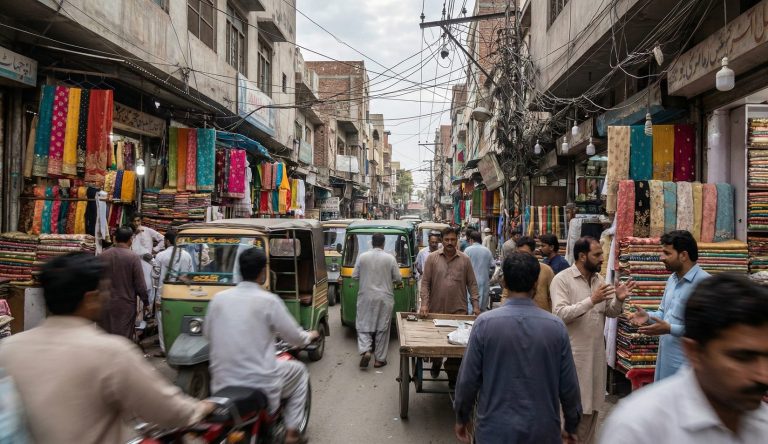
I’ve wandered the tight lanes of the Walled City past midnight, stepping around motorbikes and stray cats, following nothing but the smell of frying masala until I landed at a nameless stall and ate something ridiculous off a plastic plate. Best meal of my life. I’ve also had mornings where I questioned my life choices because I trusted the wrong chutney. Or the wrong ice. You learn. Fast. Lahore isn’t about ambience or curated lighting. It’s about density. If thirty people are elbowing each other for a serving, you join them and don’t overthink it.
Why Lahore Is Obsessed With Food
In most cities, you meet friends for coffee. In Lahore, you meet for another meal. It doesn’t matter that you already ate. That’s irrelevant. Food is social currency here. It’s how business happens, how gossip spreads, how families reconnect. You don’t say “let’s catch up.” You say “come eat.”
The layers of history are edible. Mughal kitchens left behind rich gravies and slow-simmered stews. Sikh and Punjabi influences pushed bold spices, heavy-handed butter, char from open flame. British rule left its odd little fingerprints, but the real heartbeat is desi — tandoor smoke, karahi oil, thick naan pulled from clay ovens. Walk through Lakshmi Chowk and you’ll smell decades of repetition. Gulberg, on the other hand, experiments. Burgers stuffed with seekh kebab, fusion nonsense that sometimes works and sometimes… doesn’t.
Timing matters. Breakfast isn’t toast and tea. It’s a full assault. Night snacks don’t exist at 7 PM. They wake up at midnight, when the sidewalks buzz and the tea stalls turn into unofficial parliament sessions. Eat Nihari at the wrong hour and locals will look at you like you just insulted their grandmother. There’s a rhythm to hunger here. Ignore it and you’ll feel slightly off all day.
Must-Try Dishes in Lahore
Skip the salad idea. This is not the place for restraint. You’re here for spice, fat, slow reduction, smoke, heat. Real Lahori food.
Karahi
Karahi isn’t food in the casual sense. It’s theater. Loud, greasy theater.
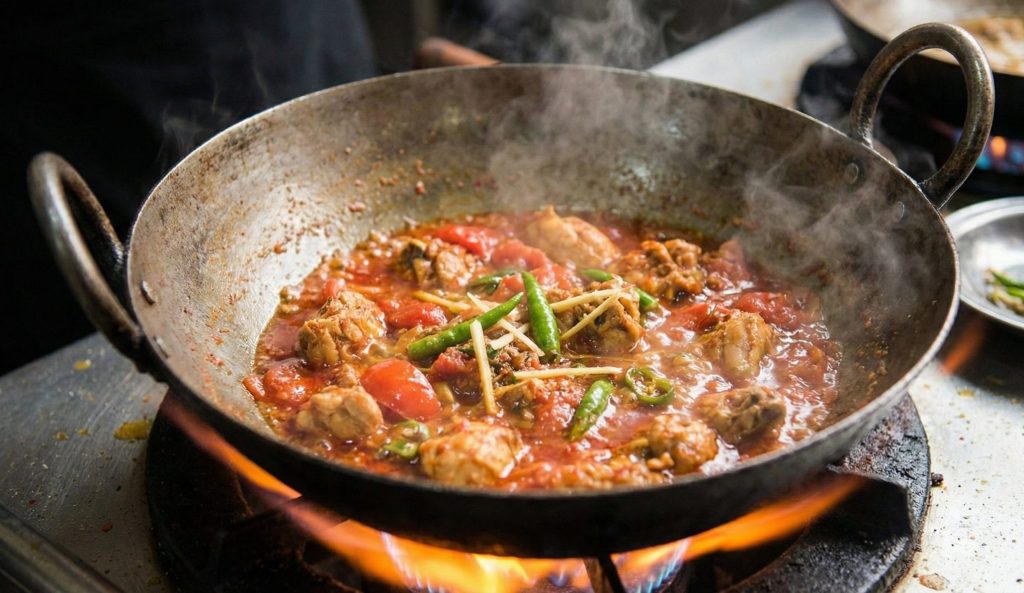
You smell it first — hot oil catching the edge of ginger, tomatoes breaking down into something darker, deeper. Then you hear it. That metal spatula scraping across a thick iron pan that’s been blackened by flame for years. Decades maybe. The karahi itself looks indestructible, like it survived a small war. Meat goes in raw. No gentle build-up. Chicken, mutton, sometimes organ meat if the cook’s in that mood.
In real Lahori karahi, onions don’t belong. People will argue about this, but I’m telling you — tomatoes, crushed garlic, green chilies, red chili powder, coriander, salt. That’s the backbone. And oil. A reckless amount of oil. The cook doesn’t measure. He just knows. He leans over the flame, stirs, steps back, lets it rage, then drags it forward again so the masala tightens and grabs onto the meat like it refuses to let go.
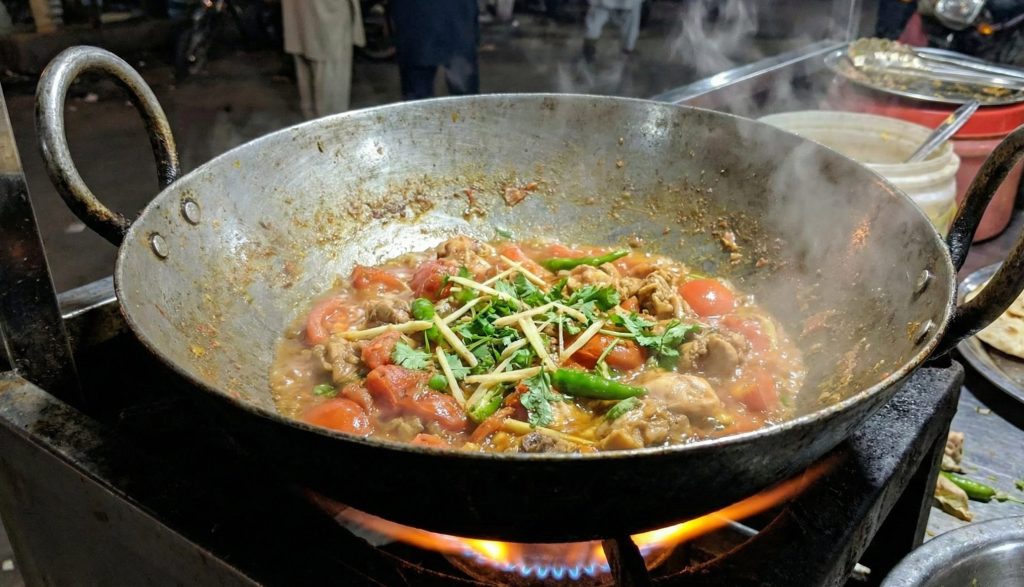
You don’t ask for a plate. You ask for half kilo. One kilo. More if your cousins showed up hungry. It lands in front of you still bubbling, still spitting. Tear naan. Scoop. Burn your fingertips a little. That’s part of it.
Taka Tak
Taka Tak isn’t subtle. It’s violent in the best way.
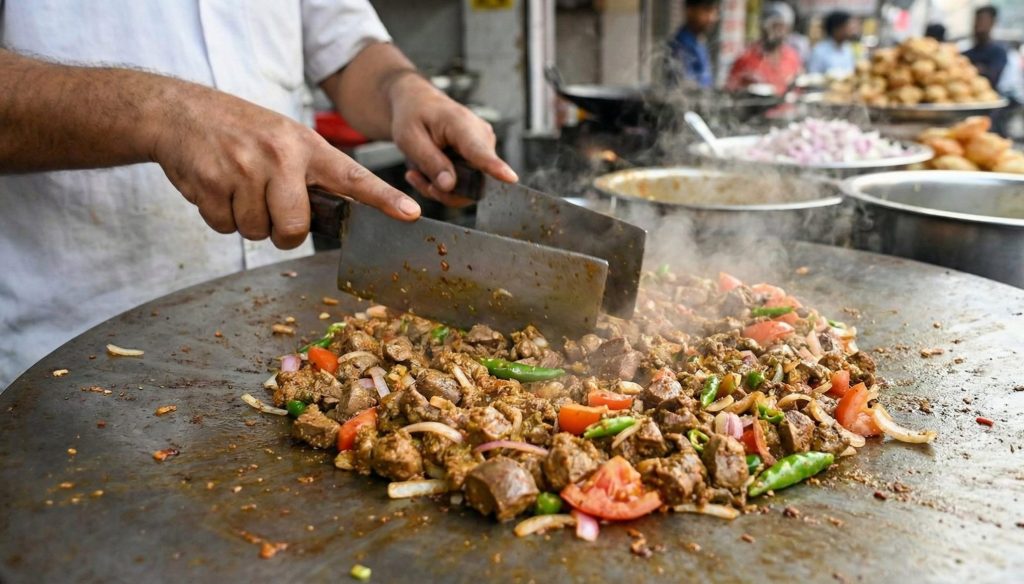
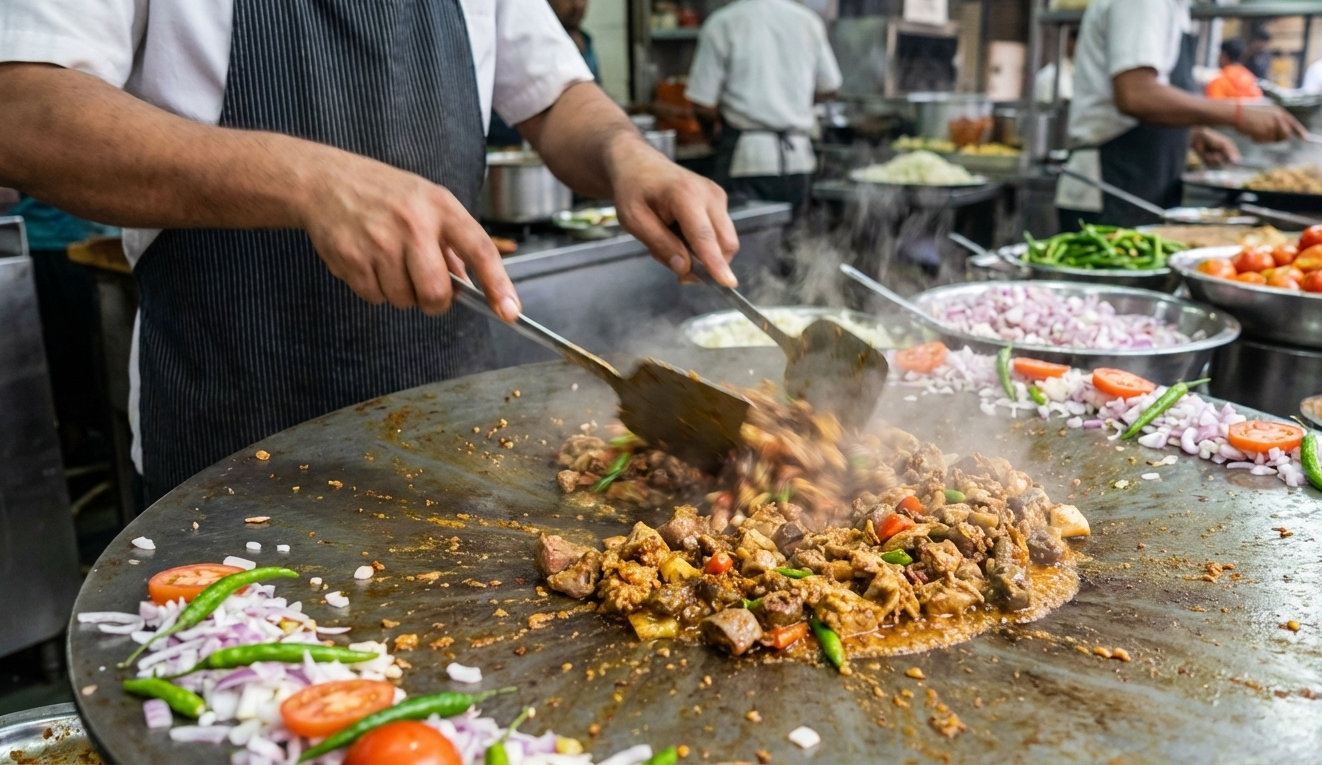
The name comes from the sound — taka, tak, taka-tak-tak — two metal blades hammering against a flat iron griddle. Brains, kidneys, heart, liver all thrown down together with tomatoes, green chilies, black pepper, masala, a slab of butter sliding across the heat. The cook chops everything in rapid bursts, sparks almost flying. It looks messy. It is messy.
Steam slaps your face. Someone squeezes lemon over the whole thing like a finishing punch. The texture ends up soft, almost creamy in parts, chunky in others. Rich in that unapologetic offal way. If you’re squeamish, this isn’t your starter dish. No one’s easing you into it.
But when it’s good — and I mean properly done on a screaming-hot tawa — it’s outrageous. Salty. Spicy. Slightly wild.
You eat it fast because it cools fast. And once it cools, it’s not the same.
Gol Gappay
Chaos in a shell.
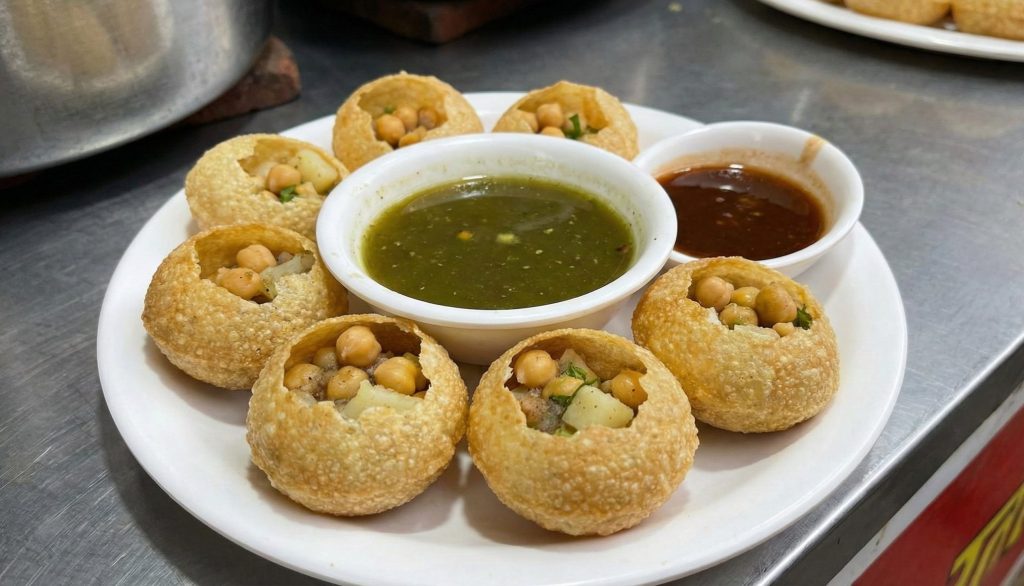
A vendor cracks open a hollow puri, stuffs it with potatoes, chickpeas, tamarind chutney, chopped onions maybe, then dunks it into spiced mint water so sharp it wakes your ancestors. You take it whole. No nibbling. Bite it wrong and you’ll baptize your shirt in green chili water.
It’s sour, cold, spicy, crunchy, sweet — all at once. Some travelers panic about the pani. Fair. Choose the vendor with a crowd and decent hygiene. High turnover means freshness. This isn’t the time to be brave for Instagram.
Lahori Fried Fish
Winter favorite. Loud. Brutal.
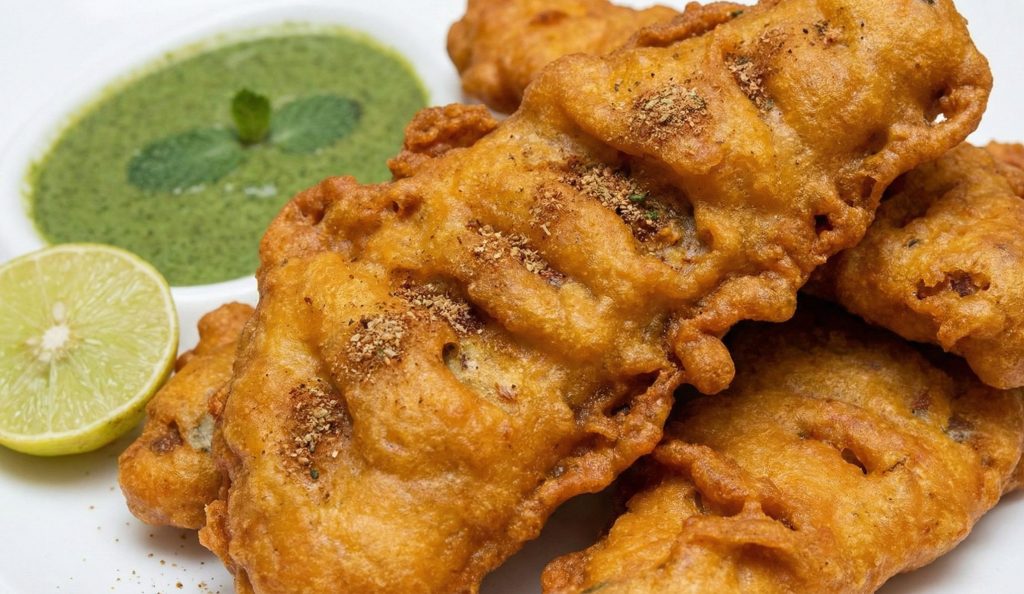
River fish gets buried in gram flour spiked with ajwain, crushed coriander seed, turmeric, red chili, salt — then deep-fried until the crust turns armor-level crisp. The color goes dark gold edging on mahogany. Steam escapes when you break it open.
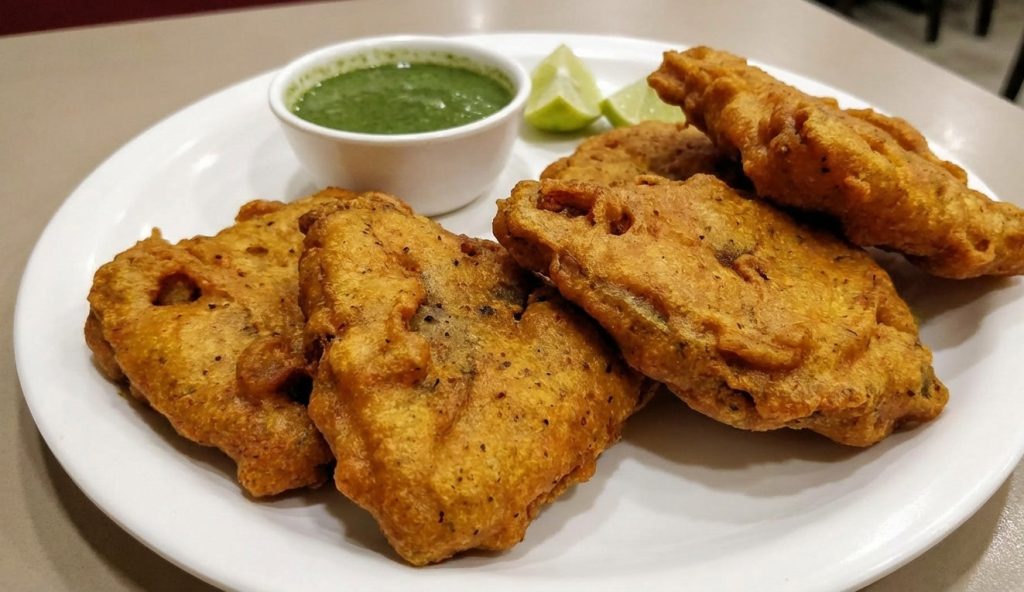
You eat it with your hands. Oil runs down your fingers. There’s no elegant way to handle it. Good.
Nihari
This one rules the city.
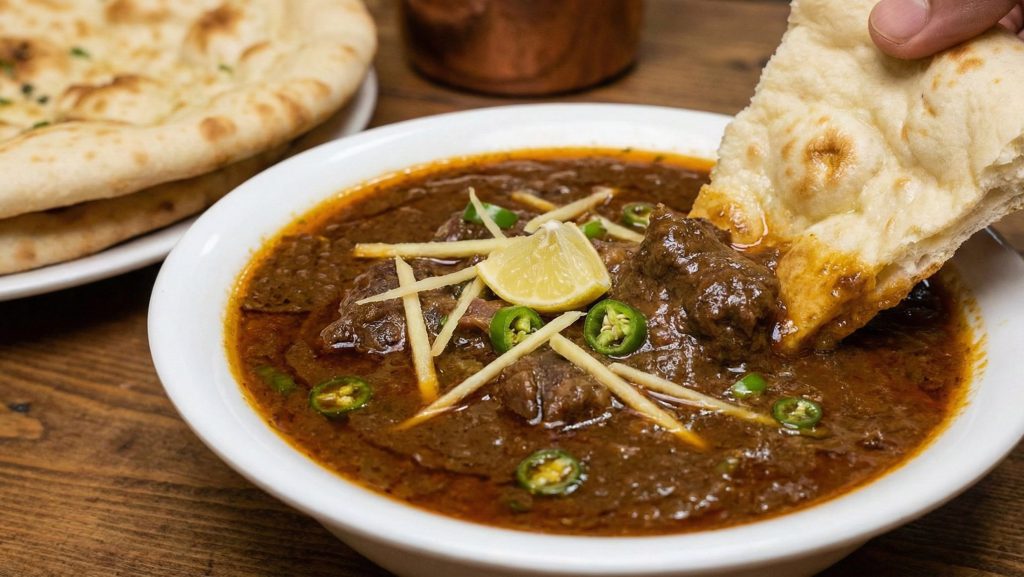
Beef shank cooked overnight until the marrow dissolves into the gravy, thickening it into something almost gluey in the best possible way. The surface shimmers with fat. Garnish lands on top — matchstick ginger, green chilies, coriander, lemon squeezed at the last second. Scoop with khamiri roti. Drag. Repeat.
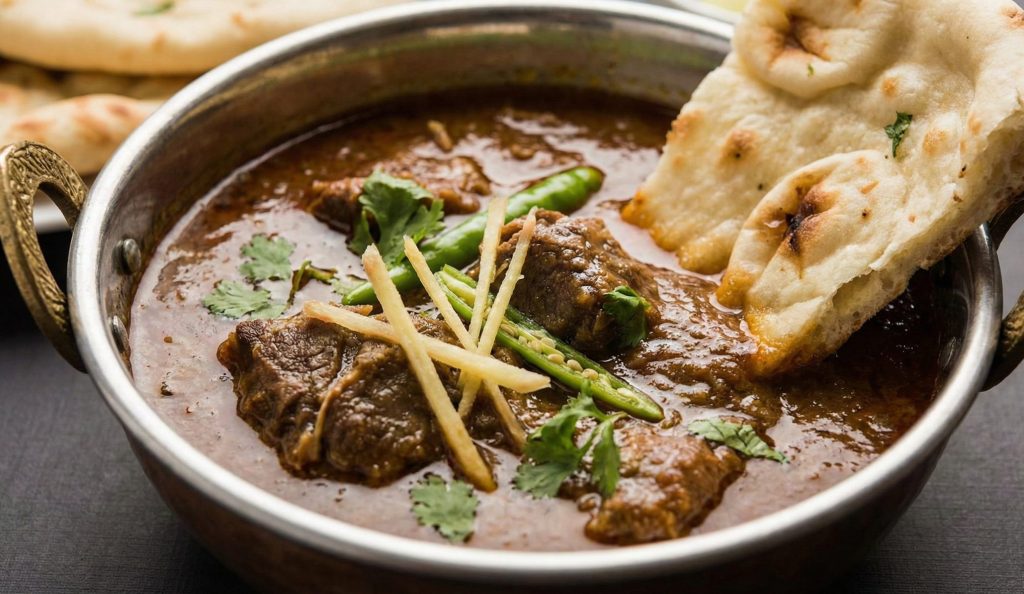
Eat it in the morning. Please. By afternoon it feels wrong, like wearing winter clothes in June. And yes, it’s heavy. You will feel it settling in your bones. Cancel plans afterward.
Siri Paye
Let’s not pretend this is easy.
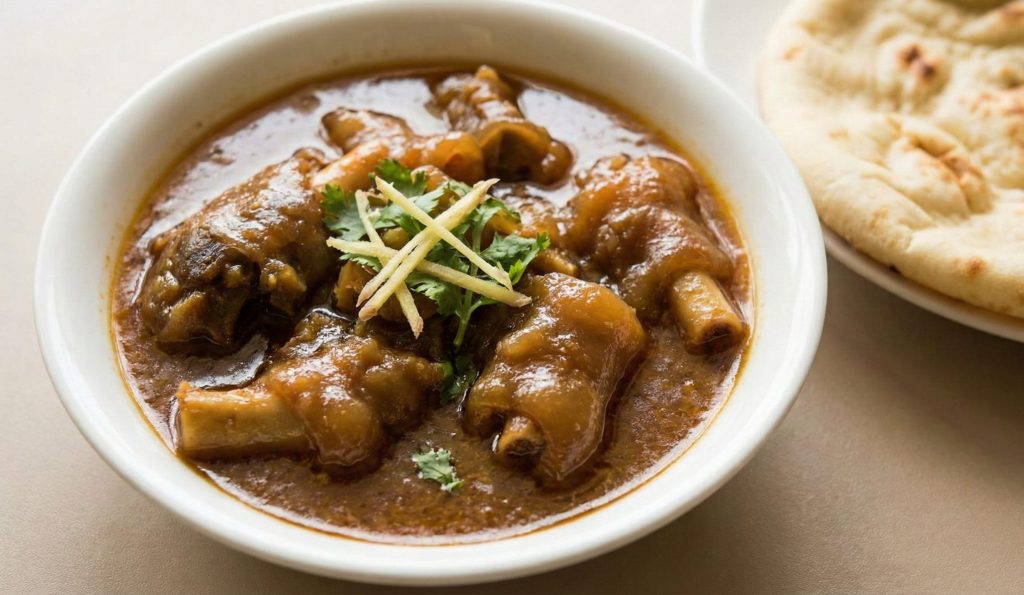
Goat or cow head and trotters, simmered for hours until the broth thickens with collagen. The texture is sticky, almost gelatinous. The flavor? Deep, animal, unapologetic. Some people can’t get past the idea. I get it.
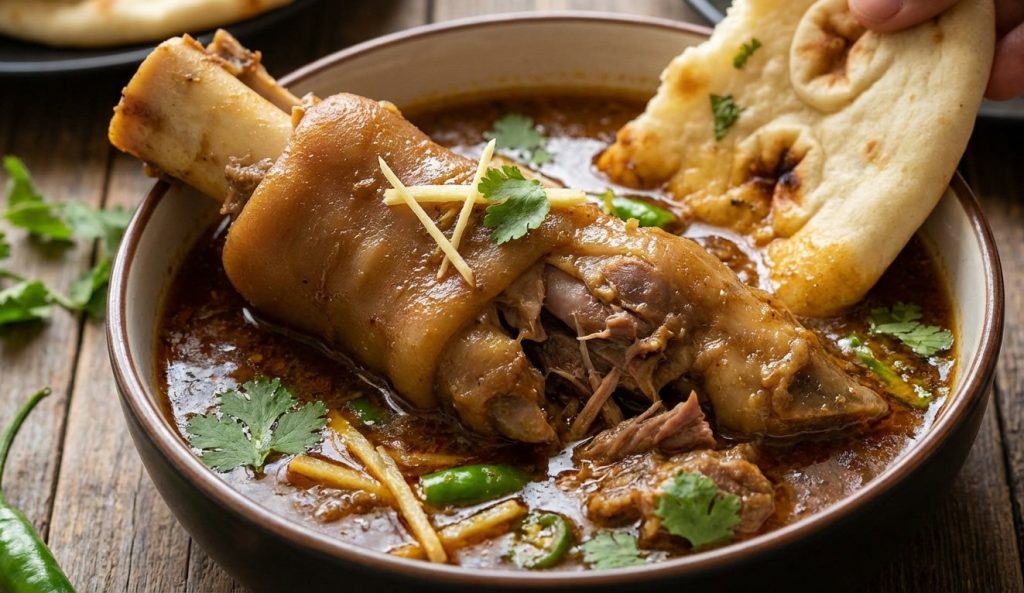
But locals treat it like sacred breakfast. Dawn meal. Fresh naan. Steam rising in the cool air. Try it once. Or don’t. No shame either way.
Jalebi
Jalebi is sugar with swagger.
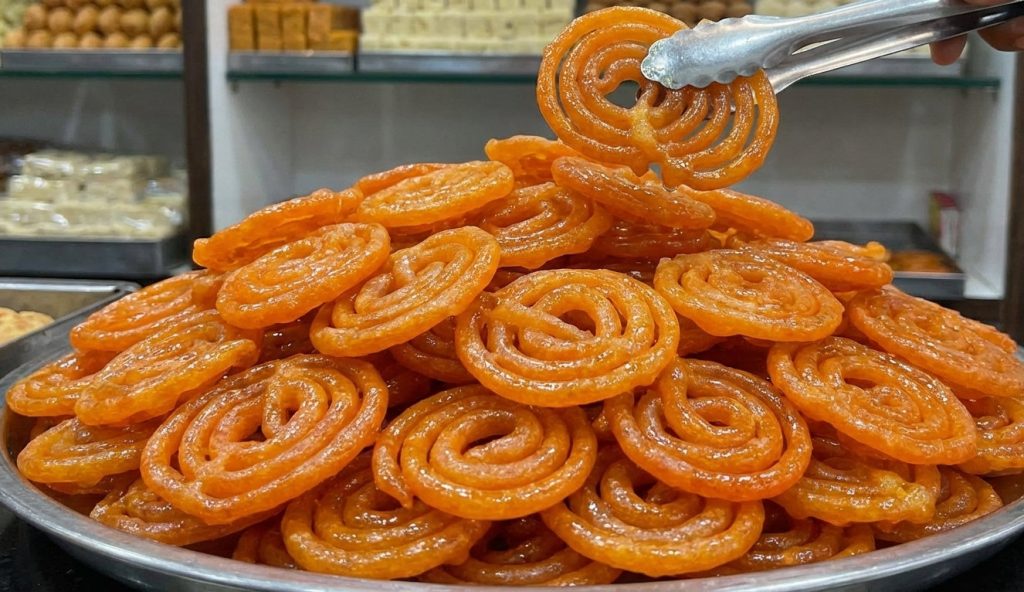
The batter gets piped into hot oil in tight spirals, sizzling the second it hits. The coils puff slightly, turn gold, then get lifted out and drowned in saffron syrup that’s thick enough to coat your fingers in seconds. They don’t soak forever. Just long enough.
You bite into one and it cracks first — sharp, brittle — then collapses into syrupy sweetness that runs down your wrist if you’re not paying attention. Sticky fingers are guaranteed. You stop caring.
Morning jalebi with milk feels almost responsible. Night jalebi, eaten off thin paper under a buzzing streetlight, feels reckless. I prefer reckless.
It’s too sweet. That’s exactly why it works.
Falooda
Falooda is what happens when restraint leaves the room.
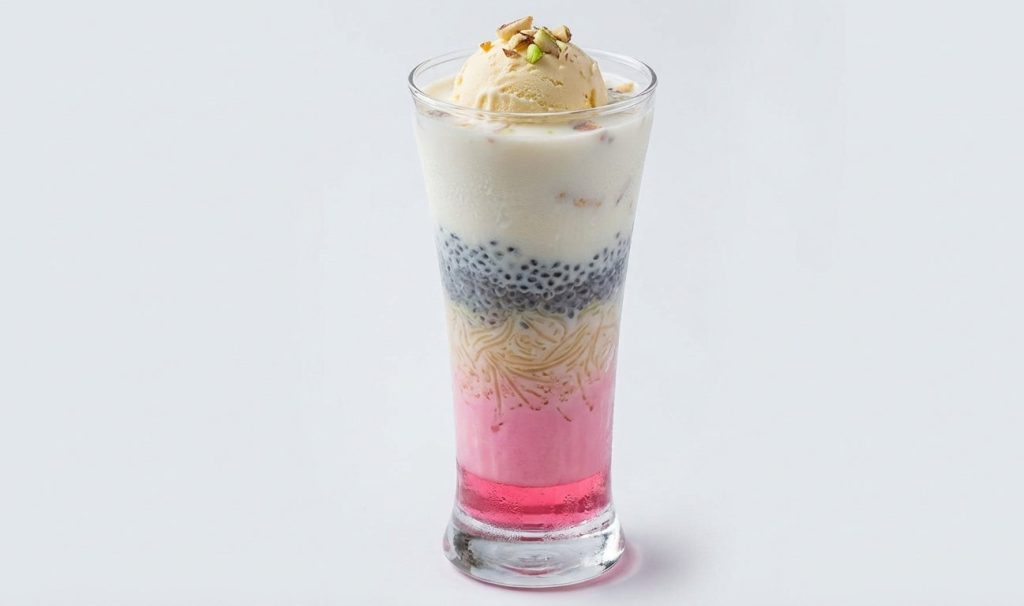
Tall glass. Rose syrup bleeding through cold milk. Vermicelli noodles drifting around like they’re lost. Basil seeds swollen and slippery, tiny jelly cubes wobbling near the bottom. Then a scoop of kulfi or vanilla ice cream dropped on top, melting into everything. Nuts sometimes. More syrup because why not.
You don’t sip falooda like tea. You dig through it with a long spoon, pulling up noodles and cream and syrup in the same bite. It’s floral, cold, slightly strange the first time. I remember thinking, what is this chaos? Then I kept eating.
In Lahore heat, falooda feels medicinal. Not actually medicinal. But close.
Half drink. Half dessert. All drama.
Lassi
Lassi here is not cute.
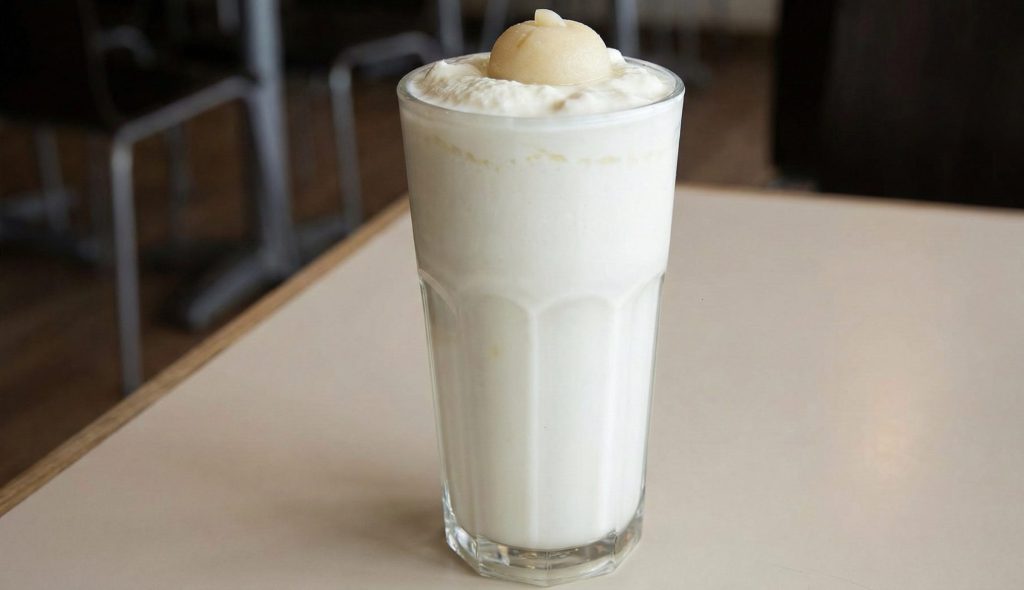
It comes in a steel tumbler that feels heavy before you even lift it. Yogurt whipped until smooth and thick, almost dense. Sweet or salty — pick your camp. The sweet version wears a cap of malai so thick you could almost peel it off in one sheet. The salty one hits with salt and sometimes roasted cumin, sharp and clean.
One glass can knock you sideways. People down it mid-morning like it’s nothing and go back to work. I don’t know how. I need to sit afterward. Maybe reconsider my life.
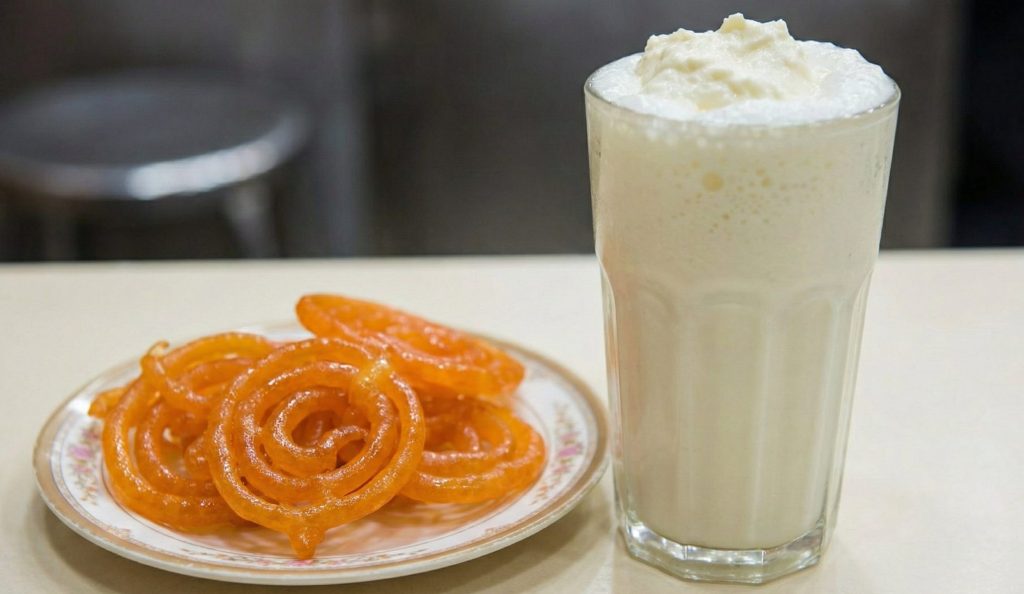
Cold, tangy, rich. It fills your stomach in a way that feels final. You don’t sample lassi here. You commit. And once you do, there’s no halfway.
Mutton Karahi
If Siri Paye scares you, order this and relax.
Chunks of mutton thrown into a heavy karahi with tomatoes, crushed garlic, ginger, green chilies, salt, oil — lots of oil. Traditional Lahori style skips onions. The meat reduces in its own juices, tomatoes collapsing into a thick masala that clings to every edge.
You order by weight. Half kilo, one kilo, more if you’re with friends. The cook doesn’t measure carefully; he eyeballs it and gets on with it. Eat it blazing hot with naan or roti while the pan still hisses.
The most food-intensive option, with a long list of classic Lahori dishes including nihari, siri paye, lassi, kebabs, dahi bhalay and fruit chaat, plus private transport between stops.
Doing a Food Walk on Your Own (Pros & Risks)
I like wandering without a plan. I think that’s when cities show their real face. Walking through Anarkali Bazaar at dusk, smoke rising from seekh kebabs, rickshaws honking, someone yelling about fresh samosas — it feels alive in a way no itinerary can replicate.
A DIY street food crawl works. Totally doable.
But logistics matter. Stay too far from the action and you’ll burn half your evening stuck in traffic. I’ve written about this in where to stay in Lahore. Gulberg is comfortable, polished, great restaurants. The Walled City is raw, intense, and honestly where the serious street food lives. Choose wrong and you’ll waste time.
The real risk isn’t getting lost. Locals will point you in the right direction, sometimes walk you there. The risk is fatigue. If you’re squeezing everything into a 3-day Lahore itinerary, you might spend forty minutes hunting one Nihari joint only to discover it sold out. Heat drains you. So does indecision.
When a Guided Food Walk Actually Helps
I used to roll my eyes at food tours. Felt scripted. Safe. Boring.
Then I tried one in Lahore and changed my mind.
A good local guide doesn’t just take you to stalls. They know the vendor who filters water properly. They know who’s been cooking the same samosas for decades. They know which alley looks sketchy but serves unreal kebabs.
If you’re already browsing different Lahore tours and experiences, you’ll see food woven into most of them. A dedicated food walk goes deeper. Less guesswork. Less stress. More eating. If you’ve got one night and want to cover serious ground without melting down in traffic, it makes sense.
The strongest match for a classic Lahore food walk: local snacks, Walled City lanes, historic stops and a final meal on Fort Road in one manageable 3–4 hour experience.
A convenient private option for exploring Lahore after dark, combining local food tastings with the Walled City while hotel pickup and transport remove much of the evening planning.
Food Safety Tips That Aren’t Overkill
Let’s address the obvious fear. Stomach trouble.
You don’t need paranoia. You need common sense.
Crowd rule first. Empty stall? Skip it. Packed stall? Good sign. High turnover keeps food fresh. Simple.
Second — heat. If it’s screaming hot out of oil or straight off charcoal, you’re usually fine. Lukewarm chutneys, pre-cut fruit sitting in the sun, limp salads… that’s where problems start. Trust your eyes.
Water matters. Bottled only. Break the seal yourself. Ice can be risky. Lime soda sounds refreshing until you remember where the ice came from.
Ease into it. Don’t attack the entire street food scene on day one. Start with grilled kebabs or a busy karahi place. Let your stomach adapt. And maybe carry rehydration salts. The spice, the oil, the sheer volume — it can hit harder than expected.
Eating in Lahore feels like a sport. Loud. Greasy. Glorious. You sit on a plastic stool, tear into naan, hear the city buzzing around you, and think — yeah, this is why people won’t stop talking about the food here.
Keep antacids in your pocket. Just in case.